In this article · 8 sections
- 1Make Personal Safety Part of Everyday Life
- 2Teach Children That Their Boundaries Matter
- 3Help Your Child Identify Trusted Adults
- 4Talk About Online Safety, Too
- 5Practice Asking for Help
- 6Respond Calmly When Your Child Shares Something Difficult
- 7Keep the Conversation Going as Your Child Grows
- 8Helping Children Feel Safe Speaking Up
Every parent wants their child to feel safe, confident, and prepared to handle difficult situations. But talking about personal safety can feel intimidating. How do you teach children to recognize unsafe situations without making them afraid of the world around them?
The answer is to focus on confidence, boundaries, communication, and knowing when to ask for help.
Children don’t need to be frightened into understanding safety. They need practical skills, age-appropriate conversations, and trusted adults who will listen when something doesn’t feel right.
01
Make Personal Safety Part of Everyday Life
Personal safety doesn’t have to be one big, serious conversation. Small discussions throughout the week can help children understand what to do in different situations.
For example, while walking through a park, you might ask, “What would you do if you couldn’t find me?” Before a playdate, you could discuss who will be supervising and how your child can contact you if they need help.
These everyday moments make safety feel like a normal part of growing up rather than something frightening.
02
Teach Children That Their Boundaries Matter
Children should understand that their feelings and personal boundaries deserve respect.
Explain that they can say no when something makes them uncomfortable, even when the request comes from someone they know. Help them practice phrases such as:
- “I’m not comfortable with that.”
- “Please stop.”
- “I don’t want to do that.”
- “I need to talk to someone I trust.”
Remind your child that they can always tell you if someone ignores their boundaries. They don’t have to figure everything out on their own.
03
Help Your Child Identify Trusted Adults
Children need to know who they can turn to when they feel worried, confused, or unsafe.
Help your child identify several trusted adults, such as a parent, relative, teacher, or school counselor. Talk about what makes someone a safe person to approach: they listen, take concerns seriously, and help the child find a solution.
It’s also important to explain that if one adult doesn’t listen, your child can keep asking for help until someone does.
04
Talk About Online Safety, Too
Personal safety extends beyond the home, playground, and school. Children also need guidance about online interactions.
Discuss what information should remain private, why people online may not always be who they claim to be, and what to do if a message, image, or conversation makes them uncomfortable.
Ask questions such as:
- “What would you do if someone online asked you to keep a secret from me?”
- “What would you do if a message made you feel uncomfortable?”
- “Who could you talk to if you weren’t sure what to do?”
Make it clear that your child can come to you even if they’ve made a mistake or broken a family rule.
05
Practice Asking for Help
Knowing that they should ask for help is one thing. Finding the words to do it can be much harder.
Practice simple phrases with your child, including:
- “Something happened, and I need to talk.”
- “I don’t feel safe right now.”
- “I’m worried about something, but I don’t know how to explain it.”
- “Can you help me figure out what to do?”
You can practice these phrases casually rather than turning them into a test. The goal is to help your child feel prepared, not pressured.
06
Respond Calmly When Your Child Shares Something Difficult
One of the most important lessons children learn is whether adults will listen when they speak up.
If your child tells you something upsetting, try to remain calm. Listen before jumping into questions or solutions. Thank them for telling you, reassure them that they did the right thing by speaking up, and explain what you’ll do next.
A child who worries about being blamed, punished, or dismissed may hesitate to share a problem in the future.
You don’t have to have every answer immediately. Being present, taking your child seriously, and helping them find the next step can make a meaningful difference.
07
Keep the Conversation Going as Your Child Grows
Safety conversations should evolve as children become more independent. Younger children may need help with boundaries and identifying safe adults, while older children may need more guidance about friendships, peer pressure, social media, and difficult decisions.
Ask open-ended questions instead of relying only on instructions. Try “What would you do if…?” or “How would you handle that?” Then listen to your child’s answer without immediately correcting it.
These conversations help children practice making decisions while knowing they have support.
08
Helping Children Feel Safe Speaking Up
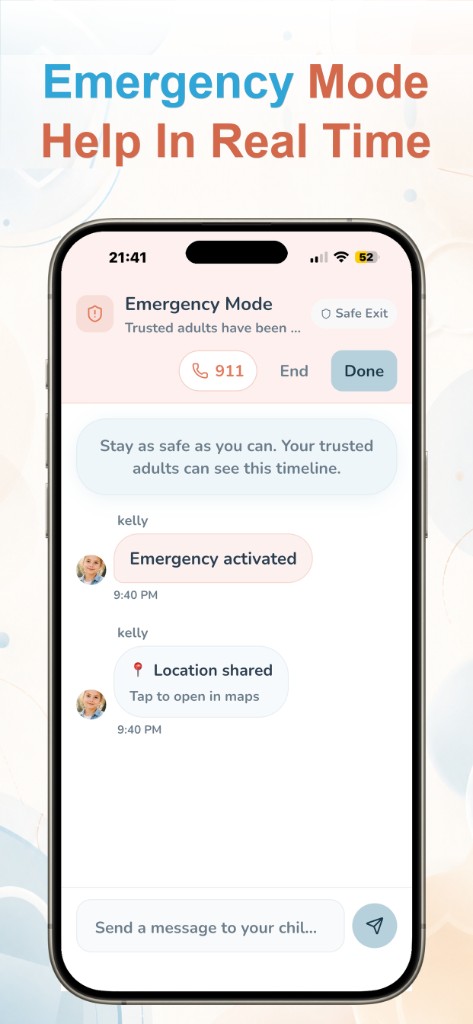
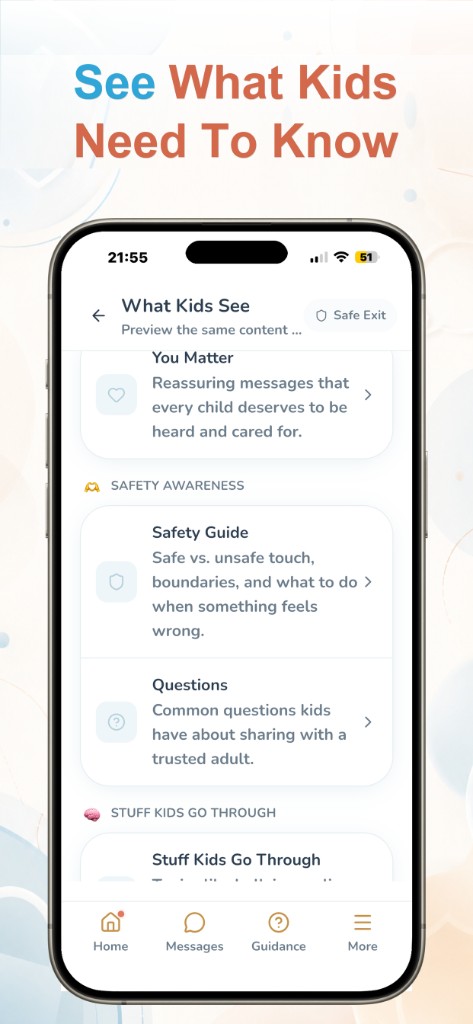
At Trust Buddy, we believe child safety begins with communication. Children should know they can reach out to a trusted adult when they need reassurance, guidance, or help.
Building that confidence doesn’t happen in one conversation. It grows through everyday interactions, patient listening, and repeated reminders that children don’t have to face difficult situations alone.
Start today: Ask your child, “If something ever made you feel uncomfortable, who are the people you could talk to?” Then give them time to answer.
Learn more about Trust Buddy: trustbuddyapp.com
Additional resource: Planned Parenthood’s guide to personal safety for parents.
Written by
Trust Buddy Team
We build Trust Buddy, a calm way for children to reach trusted adults when something feels wrong, scary, or hard to explain.