In this article · 8 sections
- 1Explain That Asking for Help Is a Strength
- 2Help Your Child Find the Words
- 3Identify More Than One Trusted Adult
- 4Listen Without Immediately Jumping In
- 5Respond in a Way That Builds Trust
- 6Show Your Child That They Don’t Need Perfect Words
- 7Keep Checking In Without Pressuring Them
- 8Helping Children Feel Comfortable Reaching Out
Children experience all kinds of difficult moments as they grow up. They may struggle with a friendship, feel uncomfortable around someone, experience bullying, make a mistake online, or face a problem they don’t know how to explain.
As adults, we often tell children to speak up when something is wrong. But when a child feels embarrassed, confused, afraid, or worried about disappointing someone, asking for help can be harder than it sounds.
Parents can make a difference by teaching children what asking for help looks like, practicing the words they can use, and showing them that they will be taken seriously.
01
Explain That Asking for Help Is a Strength
Some children believe they should be able to handle problems on their own. Others worry that asking for help means they have done something wrong.
Remind your child that everyone needs help sometimes, including adults. Speaking up is a way to take care of themselves, not a sign of weakness. You might say:
- “You never have to figure everything out by yourself.”
- “It’s okay if you don’t know what to do.”
- “You can talk to me even if you’re worried about my reaction.”
- “You won’t be in trouble for telling me that something made you feel unsafe.”
Repeat these messages during ordinary moments, not only when a problem arises.
02
Help Your Child Find the Words
Children may know something feels wrong but struggle to explain what happened. They don’t always need to tell the whole story perfectly to receive support.
Practice a few simple ways to begin a conversation:
- “Can I tell you something?”
- “Something happened, and I don’t know what to do.”
- “I feel uncomfortable around someone.”
- “I’m worried you’ll be upset, but I need help.”
- “Can you listen before giving me advice?”
Let your child know they can start with just one sentence. You can work through the details together when they’re ready.
For younger children, role-play simple situations. For older children and preteens, discuss realistic scenarios involving friendships, school, group chats, and online interactions.
03
Identify More Than One Trusted Adult
Parents are important sources of support, but children may sometimes find it easier to approach another adult first.
Help your child identify several adults they can turn to, such as a parent, relative, teacher, school counselor, or another responsible adult in their life.
Talk about how to recognize someone who listens, takes concerns seriously, respects appropriate boundaries, and helps them find support.
It’s also important to explain that if the first person doesn’t listen or help, they should try another trusted adult.
A child should never feel that one unsuccessful conversation means they have run out of options.
04
Listen Without Immediately Jumping In
When a child finally opens up, adults may feel an urgent need to fix the problem. Sometimes, however, the most helpful first step is simply listening.
Try to give your child your full attention. Avoid interrupting, criticizing, or immediately telling them what they should have done differently. Instead, ask gentle questions:
- “Do you want to tell me more?”
- “How did that make you feel?”
- “What are you most worried about?”
- “What would help you feel safer right now?”
You don’t have to agree with every choice your child made to take their feelings seriously.
If they reveal that they are in danger, prioritize their immediate safety and seek appropriate help.
05
Respond in a Way That Builds Trust
Children pay attention to how adults react when they share difficult information.
If every disclosure leads to anger, blame, or an immediate punishment, a child may become more reluctant to speak up next time.
You can still set boundaries and address unsafe choices while responding with empathy. For example, if your child tells you they replied to a suspicious online message, you might say:
“Thank you for telling me. Let’s look at what happened and figure out how to keep you safe.”
This response makes it easier to address the situation while keeping communication open.
The goal isn’t to eliminate consequences for every behavior. It’s to ensure that a child can seek help when they need it.
06
Show Your Child That They Don’t Need Perfect Words
Children sometimes stay silent because they don’t know how to explain a complicated feeling or experience.
Let them know they can start with a feeling, a question, a text message, or a simple request to sit together.
They might say, “I don’t know how to explain this,” or “Something feels wrong, but I’m not sure why.”
Take these openings seriously. You can help them find the words without pressuring them to disclose everything at once.
For some children, writing a note or sending a message may feel easier than starting a face-to-face conversation. Giving them different ways to communicate can help them take that first step.
07
Keep Checking In Without Pressuring Them
One conversation doesn’t guarantee that a child will tell you everything they’re experiencing.
Create regular opportunities to connect. You might talk during a walk, on the drive home from school, before bedtime, or while doing something your child enjoys.

Try asking:
- “What’s something that went well today?”
- “Was there anything difficult about today?”
- “Is there anything you’ve been thinking about that you’d like to talk through?”
- “Is there anything you need help with this week?”
If your child doesn’t want to talk right away, avoid turning every check-in into an interrogation. Let them know the invitation remains open.
08
Helping Children Feel Comfortable Reaching Out
Children are more likely to practice asking for help when they know adults will listen, take them seriously, and support them through difficult moments.
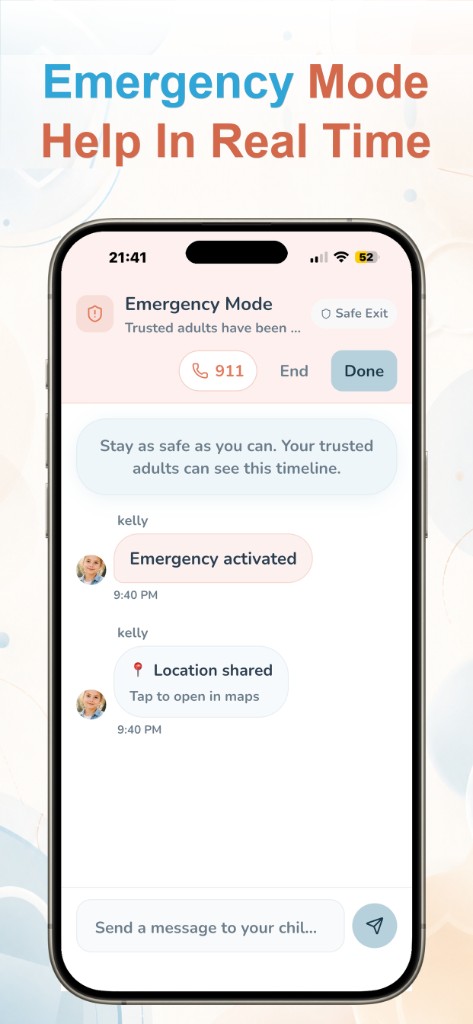
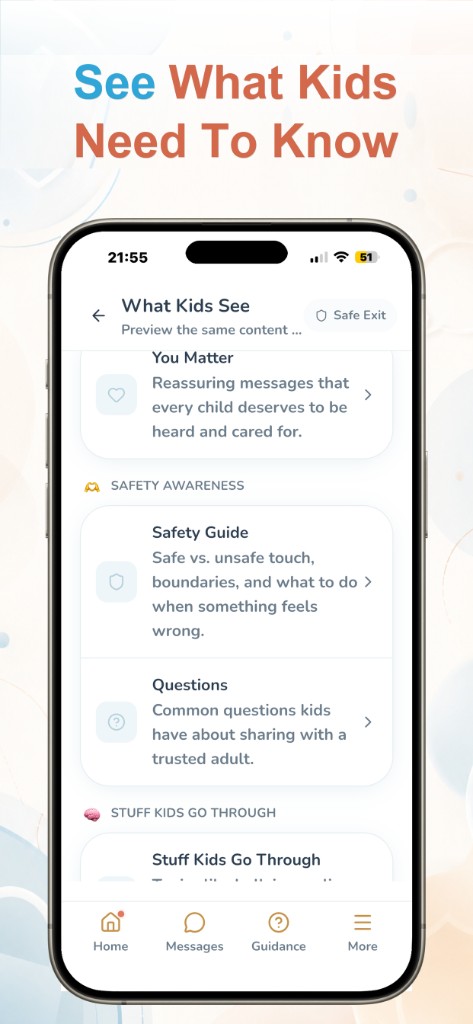
At Trust Buddy, we believe communication is an important part of child safety. Giving children ways to reach trusted adults can help reinforce a message every child deserves to hear: you don’t have to face a difficult situation alone.
Start small today. Ask your child, “If something were bothering you and you didn’t know what to do, who could you talk to?”
Listen to their answer. If they aren’t sure, help them identify a few trusted adults and practice how they might begin the conversation. That simple step can help build confidence long before a difficult moment happens.
Learn more about Trust Buddy: trustbuddyapp.com
Additional resource: FBI guidance on communicating with children about online safety.
Written by
Trust Buddy Team
We build Trust Buddy, a calm way for children to reach trusted adults when something feels wrong, scary, or hard to explain.