When parents think about protecting their children from harm or exploitation, the immediate emotional reaction is often fear and discomfort. Whether it’s boundary violations at school, inappropriate behavior from a relative or coach, or dangerous contacts online, these topics feel heavy. Because we want to preserve our children’s innocence, many families delay having hard conversations, hoping to shield them from adult realities for as long as possible.
However, treating personal safety as a taboo or scary topic actually leaves children more vulnerable. Predators count on uneducated, unprepared kids. They rely on a child’s confusion, politeness, and fear of getting into trouble.
When kids aren’t taught about boundaries in a clear, age-appropriate way, they often assume an uncomfortable incident is an isolated occurrence, or worse, that it is somehow their fault. What is truly terrifying for a child is not learning about safety rules, it is being confronted by an unsafe situation and having no idea what is happening or what to do next.
Moving the conversation from fear to education, awareness, and empowerment is the single most effective way to keep our children safe.
01
Why Silence Makes Kids Vulnerable (In Person & Online)
Exploitative behavior rarely looks like a stranger hiding in a dark alley. In the vast majority of real-world cases, boundary crossings happen gradually through people children know: trusted acquaintances, older peers, authority figures, family members, or online contacts.
When safety and consent are treated as “taboo” topics at home:
- 1Children mistake red flags for normal behavior: Without explicit rules about personal space, children may think uncomfortable physical contact or secretive behavior is normal.
- 2They confuse “surprises” with harmful secrets: Manipulators often tell kids, “This is our little secret, don’t tell your parents or you’ll get in trouble.” Without prior education, kids obey out of fear.
- 3They feel forced to submit to authority: Children are taught to obey adults. If they aren’t explicitly given permission to say “no” to an adult or family member touching them inappropriately, they feel powerless to speak up.
Education removes the element of secrecy that abusers count on. When a child recognizes a boundary violation early, the perpetrator’s leverage is broken.
02
Moving From Taboo to Age-Appropriate Awareness
Teaching personal safety doesn’t mean giving horrifying details or destroying a child’s trust in the world. It means giving them daily tools and clear terminology so safety rules feel as natural as wearing a seatbelt or wearing a bike helmet.
Young Children: Body Autonomy & Safe Touches
- Anatomical Correctness: Use proper words for body parts. Children who know the correct names for their bodies can report uncomfortable situations clearly without confusion or embarrassment.
- The “Swimsuit Rule”: Explain that private parts are the areas covered by a swimsuit. No one is allowed to touch or look at those areas except for health or hygiene (like a parent helping at bath time or a doctor during an exam with a parent present).
- Secrets vs. Surprises: Teach the difference clearly. Surprises are happy and temporary (like a birthday gift). Secrets that make a child feel bad, nervous, or uncomfortable must always be shared with a safe adult immediately.
- Forced Affection: Never force a child to kiss or hug a relative or family friend if they don’t want to. Allow them to wave, give a high-five, or say hello verbally to enforce that they own their body.
Tweens: Recognizing Boundary Crossings
- Safe, Unsafe, and Confusing Touches: Teach them to listen to their “gut feeling.” If an interaction with a family member, coach, teacher, or peer leaves them feeling “icky,” confused, or uncomfortable, it is a sign that a boundary was crossed.
- The “No, Go, Share” Rule: Coach your child that if anyone makes them uncomfortable, they have permission to say “No!”, walk or run away (“Go”), and immediately “Share” what happened with a trusted adult.
- Digital Boundaries: Extend the same body safety rules to devices: no one should ever ask for photos of private parts, send them inappropriate photos, or ask them to keep digital conversations secret.
Teens: Coercion, Consent, and Safe Havens
- Understanding Grooming & Manipulation: Talk openly about how predators, both in person and online, use gifts, special attention, or threats to manipulate young people.
- Unconditional Support: Ensure your teen knows: “No matter what situation you find yourself in, even if you made a mistake or broke a rule, you will never be in trouble for coming to me when you feel unsafe.”
03
Building a Safe Connection with Trust Buddy
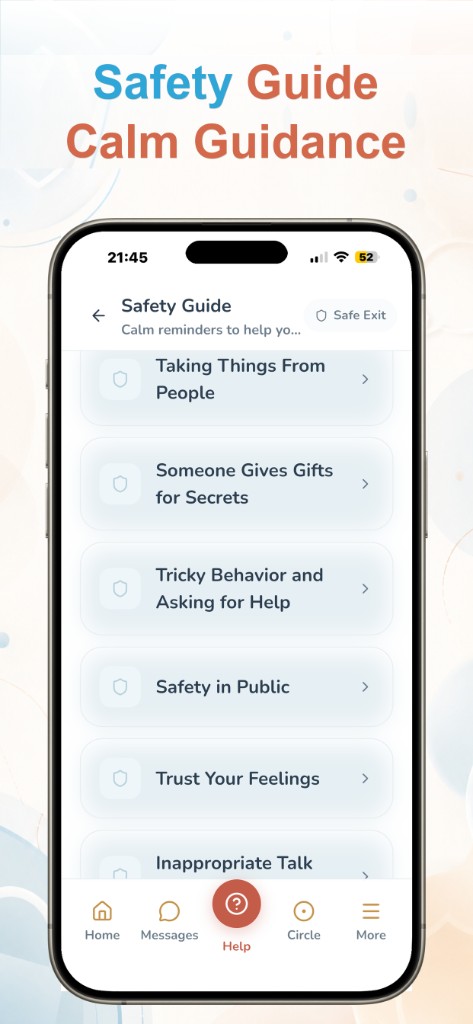
Open communication at home builds the primary bridge of trust, but kids need age-appropriate tools to share when they encounter boundary crossings, whether in person or online.
Because children often go silent out of fear, guilt, or simply not knowing how to explain what happened, Trust Buddy gives them a voice:
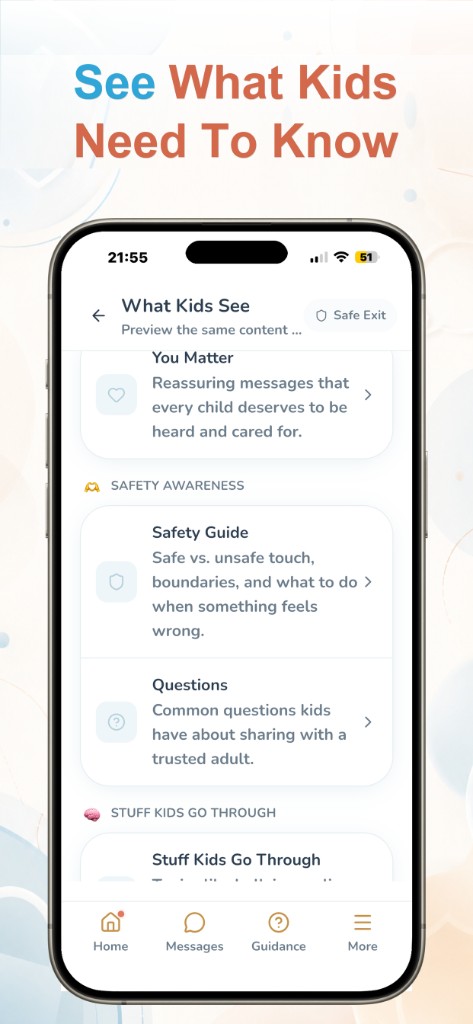
- Help When Words Are Hard: With guided features like Help Me Explain and pre-written prompts, Trust Buddy helps children find the right words to share uncomfortable situations with a parent or trusted adult without fear of judgment.
- A Safe Trust Circle: Children choose the trusted adults they feel comfortable sharing with, giving parents a clear, direct channel to listen, respond, and support their child with care.
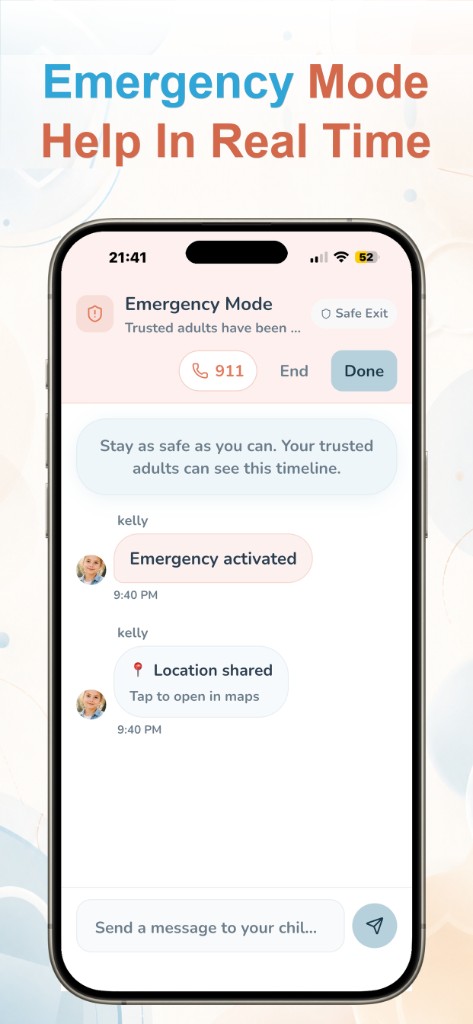
- Immediate Support Without Shame: Instead of hidden tracking or surveillance, Trust Buddy provides calm, direct ways for children to ask for support or send an emergency alert the moment something feels off.
04
Conclusion: Empowering Your Child for Life
Keeping our children safe isn’t about sheltering them from every difficult reality of the world; it’s about giving them the knowledge, vocabulary, and confidence to navigate those realities safely. When we replace taboo and silence with open, age-appropriate education, we dismantle the secrecy that predators rely on, both online and in the real world.
By pairing early safety conversations with accessible tools like Trust Buddy, you ensure that your child never feels isolated, helpless, or afraid to reach out when a situation feels wrong.
Start having these conversations today. When safety becomes a shared, everyday topic rather than a scary warning, you build a foundation of trust that protects your child for a lifetime.
Written by
Trust Buddy Team
We build Trust Buddy, a calm way for children to reach trusted adults when something feels wrong, scary, or hard to explain.